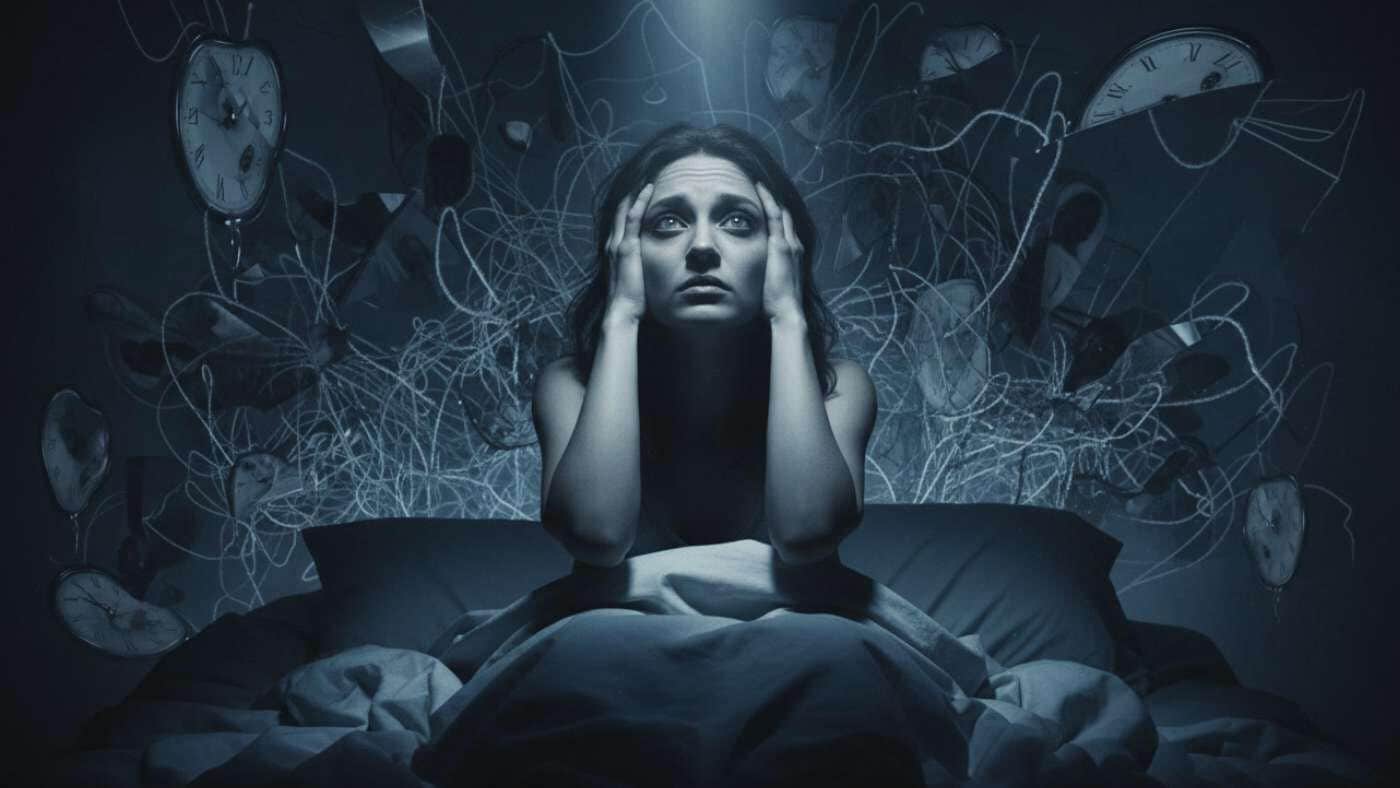

It's long past midnight. Once again you've been lying awake for hours, flipping your pillow to the "cool side" for the fifth time and seriously considering whether getting up and scrubbing the toilet might be the better option. If this grinding insomnia sounds familiar, rest assured, you're definitely not alone!
The real trigger of insomnia that nobody knows about
Millions of people struggle with exactly the same problem every night. What very few people know is that in most cases, the actual cause gets completely overlooked. A full 80% of all people suffer from insomnia at least now and then. The distress is enormous, so many end up turning to their doctor. Many doctors prescribe valerian and recommend stress prevention and earlier bedtimes. Maybe you've already tried a lot of this well-meant advice yourself, and nothing really works?
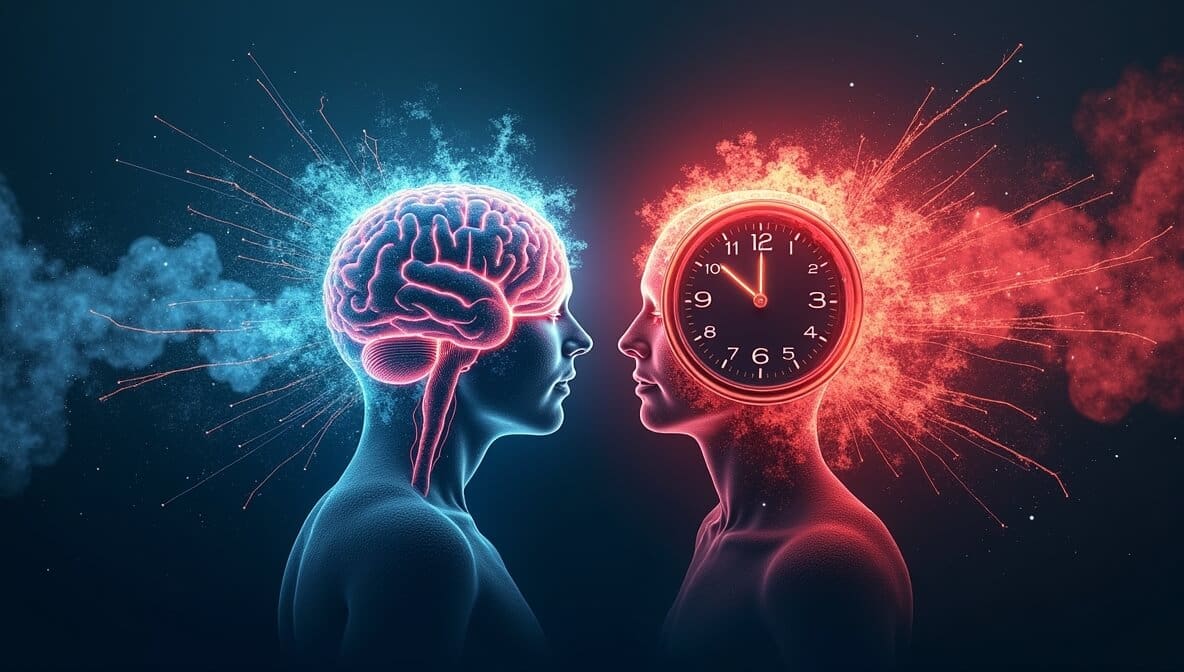
The answer sleep researchers have now found surprises even experts. Your insomnia probably has nothing to do with too much stress or bad habits. The problem goes much deeper. Your brain has lost a fundamental system responsible for tiredness. Researchers call it the adenosine system, and when it stops working properly, you can be awake for 18 hours and physically exhausted, yet your brain simply doesn't send a sleep signal.
I'll explain what's behind it and how you can reactivate this system.
The truth about why we can't sleep
Imagine you have a smoke detector in your living room that no longer goes off, even though there's a fire. That's exactly how the brain works in chronic insomnia.
The broken warning system in your brain
In our brain, adenosine is that smoke detector: the messenger that makes you tired. The longer you're awake, the more of it builds up in your brain. Normally, once it reaches a certain level, it sends the signal: "Time for bed." Your eyelids get heavy, you feel tired, and falling asleep feels natural.
In people with sleep disorders, though, this alarm no longer works...
Why screens destroy your sleep system
Researchers at Stanford University have found that habits like chronic screen use in particular dramatically desensitize the adenosine receptors. Your brain still produces adenosine, but the receivers no longer respond to it. You knock on the door, but nobody answers.
That explains why you can be exhausted AND wide awake at the same time. Your body is screaming for sleep, but your brain doesn't get the message. So the causes of insomnia run deeper than you might think.
Caffeine completely kills your sleep quality
Caffeine puts the icing on the cake of this whole mess, because it blocks these receptors completely. You're literally training your brain to ignore tiredness. A study in the journal Sleep Science showed that people who drink more than 3 cups of coffee a day have measurably lower adenosine sensitivity after two weeks. Even if you now quit caffeinated drinks like espresso, energy drinks, cola and the like completely, the receptors need weeks to recover.
Luckily, there's a faster way to reset this system. More on that in a moment.
The cortisol vicious circle: why insomnia feeds itself
This is where it gets really nasty. Because even if your adenosine system eventually kicks back in, the next spoilsport is already coming around the corner...
"Houston, we have a cortisol problem!"
Your stress hormone system has gone completely haywire, and nobody on board knows where the "off switch" is.
Normally, the stress hormone cortisol follows a clear 24-hour rhythm. In the morning it's high and wakes you up. In the evening it drops so melatonin can take the stage. That's how healthy sleep works. In theory, at least...
Your body in permanent emergency mode
With chronic insomnia, this system tips over completely. Researchers call it HPA axis dysregulation: your body's central stress response system gets out of sync. A study by Hirotsu et al. (2015) showed that people with sleep disorders have significantly elevated cortisol levels in the evening and at night. Your body stays in fight-or-flight mode, even when you've long since gone to bed.
The orbit you can't escape
The nasty part? It creates a vicious circle. Poor sleep raises cortisol. High cortisol prevents deep sleep. No deep sleep means even more cortisol the next day. And so on. This cycle explains why sleep problems often become chronic and rarely resolve on their own without targeted intervention.
Johns Hopkins University found that a single night with less than five hours of sleep can trigger a prediabetic state in healthy people because of the cortisol overload. Your metabolism, your immune system, your mental health: it all hinges on this one hormone.
Right now you're probably thinking: "Great, my brain is broken and I'm doomed." I can reassure you there, because it's not quite that hopeless after all. There are neurological methods that can break this cycle, and much faster than you think.
How to reprogram your brain into "sleep mode"
Sleep researchers at the Max Planck Institute have discovered something I find very remarkable, yet it's still practically unknown to the general public.
The secret of "perfect sleepers"
People who sleep exceptionally well show a very specific frequency pattern in the brain. When they fall asleep, their brain drops quickly from beta waves (waking state) through theta waves (relaxation) straight into delta waves, the deepest sleep stage, where real regeneration happens.
In people with insomnia, exactly this quick transition is missing. The brain gets stuck in beta or alpha waves, spins in thought loops and simply can't come down.
Frequency entrainment: the direct route to sleep
That brings us to what I've been researching with passion for years: frequency entrainment. It sounds complicated, but it's a surprisingly simple principle. Your brain adapts to external frequencies. So when you listen to certain frequency patterns, your brain automatically synchronizes with them. Navy SEALs have been using this technique for years to fall asleep within minutes in extreme situations.
Why valerian and the like don't work for you
Maybe you've already tried a lot of things: meditation, sleeping pills, breathing exercises, supplements. The reason most of it doesn't really help is simple. All these methods try to repair your broken adenosine system or your disrupted cortisol rhythm. The problem is that these systems need weeks or even months to regenerate, if they do at all. It's like trying to repair a car while you're flooring it on the highway. Frequency therapy takes a different route. It bypasses your faulty system completely and gives your brain the direct instruction: "It's bedtime now", regardless of whether your natural sleep mechanisms are working at the moment.
How to bypass the "construction site" in your head
The brilliant part: you completely bypass your broken adenosine system and the cortisol problem. Your brain no longer has to wait for the faulty tiredness signals, and your stress hormone system finally gets the signal that it's allowed to switch into well-deserved end-of-the-day mode. You're basically giving your brain the direct instruction: "It's bedtime now", no matter how scrambled your systems are at the moment. Studies from Stanford sleep labs show that binaural beats at 0.5-4 Hz (the delta range) can significantly extend deep sleep phases.
Neuro Sleep-Therapy: your complete sleep system
I developed Neuro Sleep-Therapy based on exactly this principle. It's a complete system with 5 specialized frequencies that tackle all the typical sleep problems right at the root: when you can't fall asleep, when you keep waking up at night, and when you wake up in the morning completely unrested, feeling like you've been run over by a heavy-duty truck.
- Neuro Sleep Hypnosis (30 min): A deep hypnosis induction that deliberately guides your brain from beta waves (waking state) through theta into delta waves. Your thought carousel stops, your body relaxes completely, and you drift into deep, restorative sleep.
- Neuro Deep Sleep Frequency (60 min): Constant delta frequencies at 2.5 Hz keep you in deep sleep all night. Your pineal gland is stimulated, melatonin flows naturally, and your brain goes through the regenerative processes it really needs. No more waking up at night because your cortisol shoots up or your adenosine system goes haywire. You get the frequency in two versions: one for headphones with binaural beats, and one for speakers with isochronic tones, in case you'd rather not wear headphones at night.
- Neuro Mind Reset (30 min): For the evenings when your head just won't switch off. This frequency actively shuts down your thought carousel and brings you into a state of dissociation and mental calm. Perfect as preparation for sleep.
- Neuro Sleep Suggestions (20 min): Subconscious programming that tunes your brain to healthy sleep. Ideal for improving your sleep patterns in the long term.
- Neuro Power Nap (20 min): For quick regeneration during the day. Mental and physical recovery without falling into deep sleep.
All the frequencies in Neuro Sleep Therapy work together effectively and reinforce each other. They cover every phase of your sleep and support your brain exactly where it needs help.
Neuro-Sleep Therapy
€129,95
€169,75
Sleep like a baby again… Imagine lying down in bed. Normally, the next 30 minutes would be tossing and turning, a carousel of thoughts, the fear of another sleepless night. But tonight is different. You start the Neuro-Sleep Therapy, close… Mehr erfahren

Why you can stop feeling guilty
If you've ever felt guilty because you can't sleep, stop it! Your insomnia has nothing to do with a lack of willpower and only partly to do with the "wrong lifestyle". The main cause is neurobiology. Your adenosine system has stopped sending signals, your cortisol rhythm is out of whack, and your brain has simply forgotten how to switch into sleep mode.
That may sound pretty dramatic at first, but just as your brain unlearned these patterns, it can learn them again. Frequency therapy gives your brain back the neurological guidance it needs to fall asleep naturally, sleep deeply through the night and wake up refreshed.
Neuro Sleep Therapy was developed for exactly this purpose and is coming out soon. I'm really curious to see what it will change for you. Good sleep is essential for a happy, fulfilling life. It's never too late for your brain to learn it again. All it needs is the right neurological guidance, and that's exactly what it's getting now.
Yours, Marko C. Lorenz
P.S. Hey… Thinky here! Remember when you got me out of my egg? Shortly after I was born, I discovered a mysterious code and gave it to you so you'd keep it safe. Over the last few days I've gotten a lot closer to the secret behind it… Next week I'll send you an email and can finally tell you more about it...

FAQs
What is the main cause of insomnia?
The main cause of chronic insomnia lies in a faulty adenosine system in the brain. Adenosine is the messenger that normally signals tiredness. In people with sleep disorders, the adenosine receptors no longer work properly: the brain still produces tiredness signals but can no longer recognize them. On top of that, the stress hormone system (the HPA axis) gets out of sync, so cortisol stays elevated even at night and prevents sleep.
Why does cutting out caffeine help you sleep?
Caffeine completely blocks the adenosine receptors in your brain. That way, you train your brain to ignore tiredness. Studies show that people who drink more than 3 cups of coffee a day have measurably lower adenosine sensitivity after two weeks. Even after you quit, the receptors need several weeks to recover. A caffeine reset of at least 7 days can noticeably improve your sleep quality.
What are delta waves and why do they matter for sleep?
Delta waves are brainwaves with a frequency of 0.5-4 Hz that occur during deep sleep. This is the phase when the most important physical and mental regeneration happens: the pineal gland releases melatonin, the immune system gets stronger, and the brain goes through a cleaning process that flushes out toxins. People with insomnia often don't reach this delta wave phase at all, or only very briefly.
Can insomnia be solved without medication?
Yes, insomnia can be solved without medication. Frequency entrainment is a scientifically grounded method in which external frequency patterns (binaural beats or isochronic tones) guide the brain directly into sleep mode. This technique completely bypasses the faulty adenosine system and the cortisol problem. Studies from Stanford sleep labs show that binaural beats at 0.5-4 Hz can extend deep sleep phases by up to 30%.
How long does it take for the adenosine system to recover?
The adenosine system usually needs several weeks to months to fully regenerate, provided the causes (chronic screen use, caffeine consumption) are eliminated. With heavy caffeine consumption, the adenosine receptors can become desensitized within just two weeks. Recovery takes at least as long, often longer. Frequency-based therapies can speed up this process by bypassing the system directly.
What is the HPA axis and how does it affect sleep?
The HPA axis (hypothalamic-pituitary-adrenal axis) is the body's central stress response system. It regulates cortisol release, which normally follows a 24-hour rhythm: high in the morning (alertness), low in the evening (sleep). With chronic insomnia, this system gets out of sync and cortisol stays elevated even at night. That creates a vicious circle: poor sleep raises cortisol, and high cortisol prevents deep sleep.
Why don't sleeping pills work in the long run?
Sleeping pills sedate the brain, but they don't activate the natural sleep stages. They often suppress REM sleep and deep sleep, so the most important regeneration doesn't happen. They can also be addictive and lose their effect over time. Sleeping pills don't treat the cause (a faulty adenosine system or a disrupted cortisol rhythm). They only mask the symptoms.