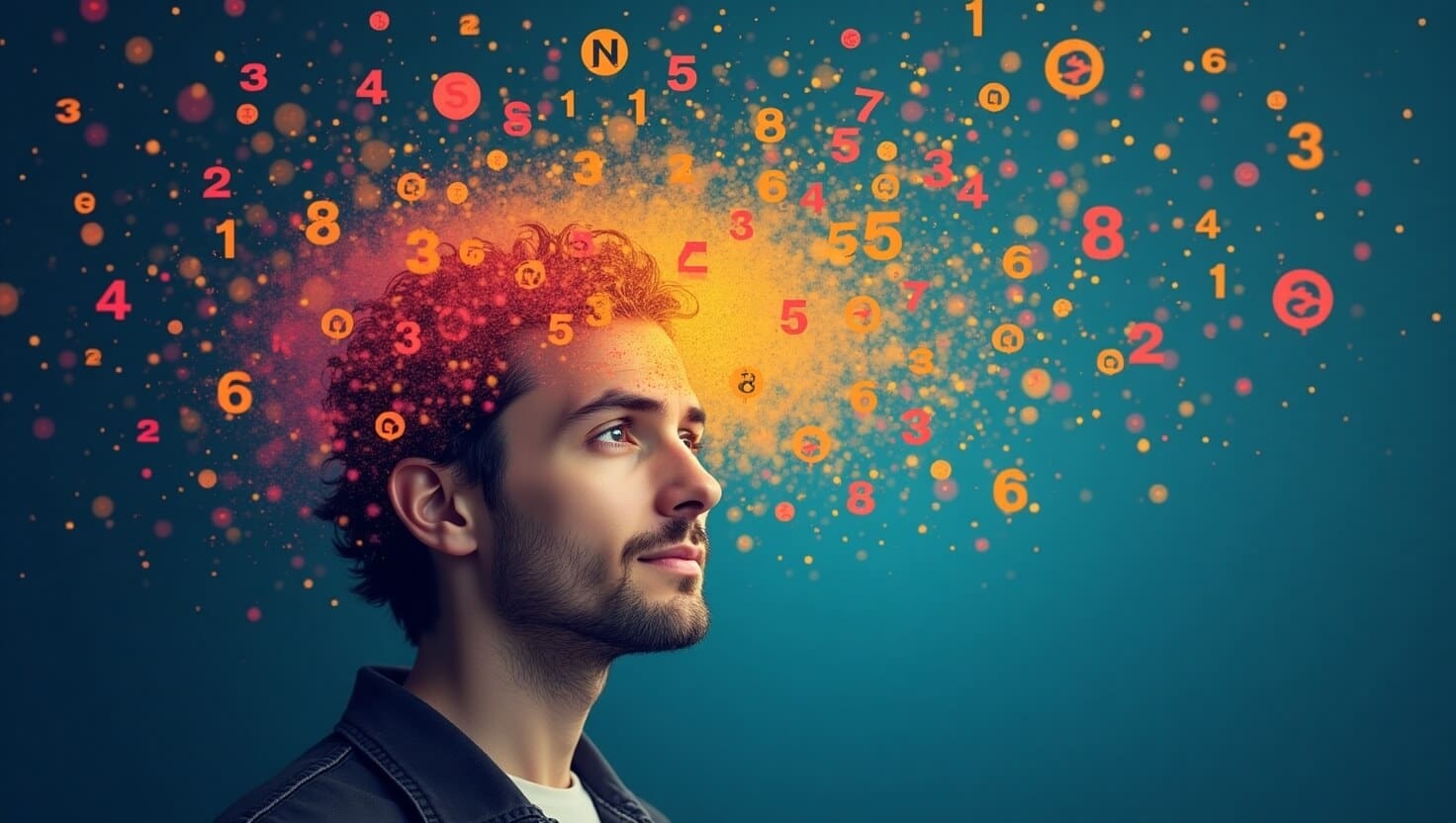

While you're reading this, "way too many" neural connections are dying in your head.
Harvard Medical School has proven it: from the age of 40, your brain shrinks by 5% per decade. But that's only the tip of the iceberg. The real horror is playing out at the cellular level, a silent mass die-off you don't even notice.
Until it's too late.
The neurological collapse nobody sees coming
Your brain has about 86 billion neurons with trillions of connections. Sounds like a lot? Do the math: millions of synapses die every day. Over 10 years, that adds up to billions of lost connections. A neurological mass die-off you don't even notice.
You already know the symptoms:
- You walk into a room and can't remember why
- You have to reread sentences three times
- Names? Forgotten the moment you hear them
- Learning new software? A torture chamber for your brain
- You react to stress like Pavlov's dog: always the same way, always predictable
That isn't normal aging. It's neurological decline in real time.
Science has found the culprit
Researchers call it "synaptic pruning": your brain deletes connections you don't use. Use it or lose it. Brutal, but it makes sense from an evolutionary point of view. The problem is that in our modern world, we keep using the same neural pathways over and over.
Get up → coffee → phone → work → Netflix → sleep → repeat.
Your brain thinks: "Cool, that's all we need. The rest can go!" And it starts tearing things down. Millions of synapses are cut. Entire neural networks wither away.
What's left are a few highways to your habits. Everything else? Wasteland.
The way out that 99% of people don't know about
Neuroplasticity. One word that changes everything.
It's your brain's ability to rewire itself, to create new connections and bring dead regions back to life. Even at 80, you can form new neurons, about 700 a day in the hippocampus.
But here's the catch: these new cells only survive if you train them. Without stimulation, they die within weeks.
A study from the University of South Australia (2025) showed something incredible: after just 12 weeks of targeted neuroplasticity training, the participants' brains grew measurably. New connections, better performance, a younger brain structure.
Link to the study: https://www.prevention.com/health/memory/a64432106/exercise-boosts-brain-health-study
What neuroplasticity training really means
Forget sudoku. Forget crossword puzzles. That's neurological kindergarten.
Let me explain why. A Columbia University study compared people's brain activity while solving puzzles with their activity during real neuroplasticity training. The result was sobering. Crossword puzzles always activate the same language centers. Sudoku always activates the same logic areas. It's like training the same muscle every day while the rest of your body wastes away.
But then came the breakthrough at MIT.
The researchers were actually looking for a cure for Alzheimer's. They experimented with rhythmic light and sound signals at exactly 40 hertz. What happened next exceeded all expectations:
The brains of the Alzheimer's patients literally started cleaning up. Toxic beta-amyloid plaques, the hallmark of the disease, were suddenly broken down faster. The microglia (the brain's garbage collectors) became hyperactive. After just one hour of 40 Hz stimulation, the plaque load was reduced by 40-50%.
Link to the MIT study: https://news.mit.edu/2025/evidence-40hz-gamma-stimulation-promotes-brain-health-expanding-0314
This effect didn't only work in diseased brains. Healthy participants also showed astonishing changes under 40 Hz stimulation. Their neurons began to fire in sync, like an orchestra suddenly playing in perfect time.
The researchers realized that it isn't about training individual brain areas (as with puzzles). It's about putting the ENTIRE brain into specific oscillation states so that everything can interact.
Science has mapped these states precisely:
- Theta waves (4-8 Hz): The state between waking and sleeping. Here your brain is like soft wax, as malleable as it gets. Children are often in this state, which is why they learn so fast.
- Alpha waves (8-12 Hz): Relaxed attention. Your critical mind steps back, and new connections can form without being sabotaged by your inner critic.
- Gamma bursts (40 Hz): The premier league. Moments of peak neurological activity. Different brain regions synchronize. New synapses light up like fireworks. Einstein had these naturally. Most people have to train them.
The difference from crossword puzzles? It's like the difference between a stroll and a rocket launch. Puzzles tickle your brain. Frequencies transform it.
7 neuroplasticity techniques you can use right away
While frequency training is the highway to neuroplasticity, there are also dirt roads you can take today. These simple techniques force your brain out of its comfort zone and activate dormant neural regions:
1. The handedness method:
Brush your teeth with your other hand. Sounds ridiculously simple? Your brain has to write completely new motor programs to do it. Open doors with your left hand (if you're right-handed). Move your computer mouse to the other side. Every unfamiliar movement forces your brain to form new synapses.
2. The routine breaker:
Take a different route to work tomorrow. Sit in a different seat at the dinner table. Take a cold shower instead of a warm one. Start the day with the other foot. Your brain hates it, and that's exactly why it grows.
3. The sensory experiments:
Eat blindfolded. Shower in the dark. Find your way around your home by touch alone. When one sense drops out, the other brain areas have to work overtime. New connections form in record time.
4. The backwards technique:
Learn to write your name backwards. Count backwards from 100 in steps of 7. Your brain has to completely rethink familiar patterns.
5. The language mix-up:
Switch your phone to a different language. Watch movies in the original language with subtitles. Give everyday objects in your home new names. Every linguistic challenge activates new neural networks. That's exactly how you train your neuroplasticity.
6. Musical instrument training:
Learn an instrument, any instrument. Guitar, piano, even harmonica. Why? Your brain has to process movement, sound, notes and rhythm all at once. The Karolinska Institute proved that after 15 months of music training, gray matter becomes measurably denser. 10 minutes a day is enough for neurological changes.
7. The second-language method:
Start a new language today. Your brain has to build completely new networks. Researchers in Edinburgh found that bilingual people develop dementia 4-5 years later than monolingual people. A new language builds a cognitive reserve, like a backup system for old age. 15 minutes of learning a day is enough.
Why this works:
Your brain is an energy saver. It automates everything it can. These exercises force it out of power-saving mode. Suddenly new areas have to be activated, new connections made, new programs written.
The difference from frequency training? It's like the difference between jogging and running a marathon. Both are training, but the intensity is different. These exercises are the perfect way to start, but if you really want to unleash the full power of your neuroplasticity, you need more.
All of these techniques are valuable. They train your neuroplasticity, no question. But they have a catch: they only ever activate parts of your brain. Learning an instrument? Motor skills and the auditory center. A new language? The language centers. Writing with your left hand? The motor cortex.
In their Alzheimer's research, the MIT researchers discovered something fundamental: real neurological transformation happens when the ENTIRE brain is synchronized, when all 86 billion neurons oscillate in the same rhythm. At 40 hertz, that's exactly what happens: complete brain synchronization that would naturally take decades of meditation.
This is exactly where frequency technologies come in. They create this synchronization directly. No more training individual areas. Instead, the whole neurological orchestra finally plays together.
The ultimate neuroplasticity accelerator
Imagine you could tap into the exact brain frequencies of people whose neuroplasticity is running at maximum. That's exactly what The Ultimate Mind Formula does. We analyzed EEG recordings of participants who were learning new skills in record time, at the moment their brains were forming new connections like crazy.
The neuroplasticity training protocol consists of three phases that build on each other:
Phase 1 makes your brain as soft as modeling clay (25 minutes). This is where the real magic happens. Your neuroplasticity gets ramped up, and suddenly your brain can form new connections again the way it did when you were a child. Without this preparation, the rest fizzles out.
Phase 2 makes full use of your activated neuroplasticity (50 minutes). While the frequencies play in the background, your brain now works at full speed. The neural areas "warmed up" in phase 1 can now form new connections lightning fast. You'll notice it when connections suddenly become clear that you had never seen before. Information links up as if on its own. In this phase, your brain builds new highways between different areas, and at record speed.
Phase 3 makes the flow last (50 minutes). Here, soothing nature sounds are added. The brilliant part: you stay in flow for hours without the typical mental exhaustion afterwards. Your brain runs at full speed, but your nervous system stays relaxed.
What you get out of it:
- Names and faces stick automatically
- You learn new skills in days instead of weeks
- You finish 8-hour projects in 3 hours
- You see through Excel formulas like Neo sees through the Matrix
- You keep track of every thread in meetings
- You master new software in no time
- Your output doubles with half the effort
- Creative solutions pop up out of nowhere
- You actively help prevent dementia and Alzheimer's (proven by Harvard studies)
- Your brain stays young and flexible well into old age
Or you activate your neuroplasticity. You build new connections, wake up dormant regions and become neurologically younger instead of older.
The Ultimate MIND Formula
€59,90
€79,95
Your secret weapon for mental superiority Imagine… You start the frequency and feel something shift inside your head. It’s as if someone flips a switch. Suddenly, your thoughts no longer race chaotically – they align like iron filings in a… Mehr erfahren

FAQs
What's the difference between brain training and the Ultimate Mind Formula?
Many people ask: "If I already have the brain training program, do I really need the Ultimate Mind Formula too?"
The answer: they're two completely different approaches that complement each other.
Brain training programs (e.g. Quantum Brain Training)
Specifically trains alpha, theta and delta waves so that your brain can enter deeper states of consciousness more easily and more steadily. Think of it as a key that makes it easier to access meditation, trance and deep relaxation.Ultimate Mind Formula
Goes one step further: the focus here is on neuroplasticity. The program supports your brain in building new connections and restructuring old patterns. Above all, this strengthens retention, concentration and memory. The goal is for you to remember things better, stay more focused and forget less in everyday life. So it's not just about states of consciousness. It's about noticeable improvements in your cognitive abilities.
Brain training programs = access to deep states
Ultimate Mind Formula = better memory, more concentration, less forgetfulness
Both have their value, and if you want to go deeper, you'll benefit from combining them.
What concrete benefits does neuroplasticity training bring to my brain?
What concrete benefits does neuroplasticity training bring to my brain?Neuroplasticity training measurably transforms your brain: you remember names instantly, learn new skills in days instead of weeks, finish 8-hour projects in 3 hours, understand complex software intuitively, and your creative output doubles. Your working memory expands, brain fog disappears and you actively help prevent dementia. Harvard studies show up to 5 years of delay in Alzheimer's.
What is neuroplasticity and why does it matter?
Neuroplasticity is your brain's ability to rewire and change itself. Without training, your brain shrinks by 5% per decade from the age of 40. With targeted neuroplasticity training, you can build new neural connections, boost your cognitive performance and actively help prevent dementia.
Can I train my neuroplasticity without frequencies?
Yes! Simple techniques like brushing your teeth with your other hand, taking new routes to work, learning an instrument or picking up a new language activate your neuroplasticity. These methods only train parts of the brain, though. For whole-brain synchronization, specific frequencies are more effective.
What do 40 Hz frequencies do in the brain?
MIT researchers discovered that 40 Hz stimulation activates the brain's cleanup process and reduces beta-amyloid plaques (a marker of Alzheimer's) by 40-50%. In healthy people, 40 Hz frequencies synchronize different brain regions, improve concentration and promote new neural connections.
How long does it take for neuroplasticity training to work?
You can feel the first effects right away. In 2025, the University of South Australia showed that after 12 weeks of targeted training, brains grow measurably, new connections form and brain structure becomes younger. Even 10-15 minutes of daily training produces neurological changes.
Can neuroplasticity training prevent dementia?
Researchers in Edinburgh found that people with trained neuroplasticity (bilingual people, for example) develop dementia 4-5 years later. Harvard studies confirm that targeted neuroplasticity training builds a cognitive reserve that acts as a shield against Alzheimer's and dementia.
Can neuroplasticity training really make my brain younger?
Yes, neurologically speaking it can. In 2025, the University of South Australia proved that after 12 weeks of training, brains show a younger structure with denser neural connections. Your hippocampus produces 700 new neurons every day, and with training they survive and connect. The result: your brain behaves like that of a much younger person.
What happens to my brain without neuroplasticity training?
Without training, your brain shrinks by 5% per decade from the age of 40 (Harvard study). You lose thousands of synaptic connections every day, your working memory gets smaller and your reaction time gets longer. The risk of dementia and Alzheimer's rises exponentially. You stay stuck in old thought patterns, and learning new skills becomes a struggle.
How quickly will I see results from neuroplasticity training?
Immediate effects: better focus and clearer thinking after the very first session. After 1 week: improved working memory. After 4 weeks: learning new skills becomes noticeably easier. After 12 weeks: measurable brain changes, denser gray matter, a younger brain structure (University of South Australia study).
Who is neuroplasticity training especially important for?
Those who benefit most: students, people over 40 (when the brain starts shrinking), anyone who needs to perform mentally, people with a family history of dementia or Alzheimer's, anyone who has to learn new technologies or skills, people with brain fog or concentration problems, and anyone who wants to stay mentally fit well into old age.
Is it really possible to double your mental performance?
Studies show that with trained neuroplasticity, processing speed increases by up to 300% (MIT), working memory expands measurably, and complex tasks get solved in half the time. Users report finishing presentations in 3 hours instead of 8, mastering new software in a single day, and remembering everything from meetings.