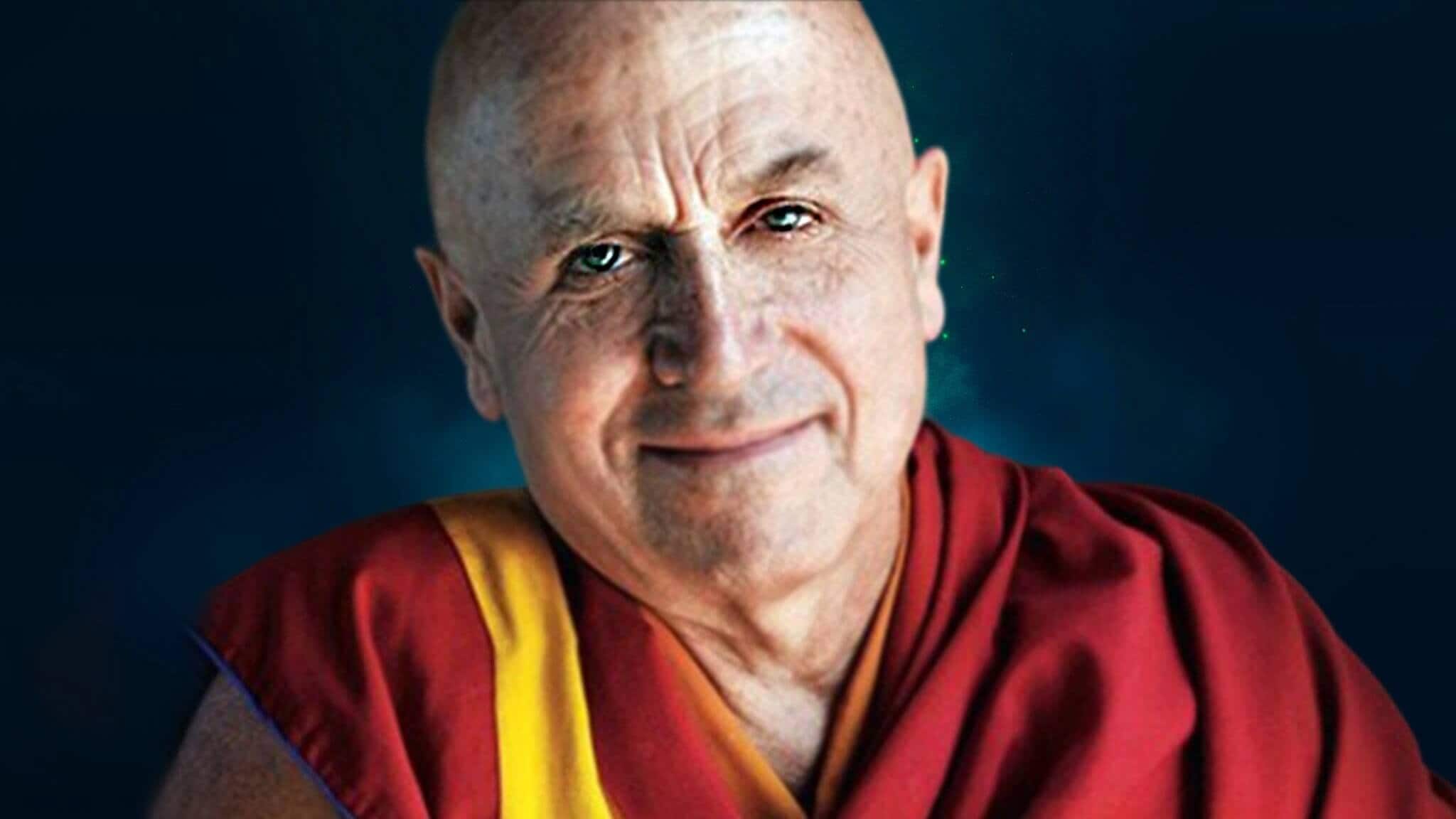
Imagine scientists could measure happiness, the way they measure blood pressure. And imagine they found a person whose happiness level was so high that it blew past their instruments. This man exists. His name is Matthieu Ricard, and his story will change the way you understand happiness forever.
The scientist who walked away from it all
Paris, 1972. Matthieu Ricard has made it. He holds a PhD in molecular biology from the Institut Pasteur. His doctoral advisor? Nobel laureate François Jacob. His career path is laid out in front of him: research, fame, money.
Then he walks away from all of it.
His colleagues think he's crazy. His family is shocked. But Ricard has found something more important than any career: a path to true happiness. He packs his things and disappears into the Himalayas. The brilliant scientist becomes a Buddhist monk.
40 years and 50,000 hours of meditation later, Ricard is no longer an ordinary human being. He has become something science has never seen before.
The experiment that changed everything
2004, University of Wisconsin. Professor Richard Davidson wants to know for sure. He has heard about this French monk who claims to be permanently happy. Davidson is skeptical. As a neuroscientist, he believes in data, not spiritual promises.
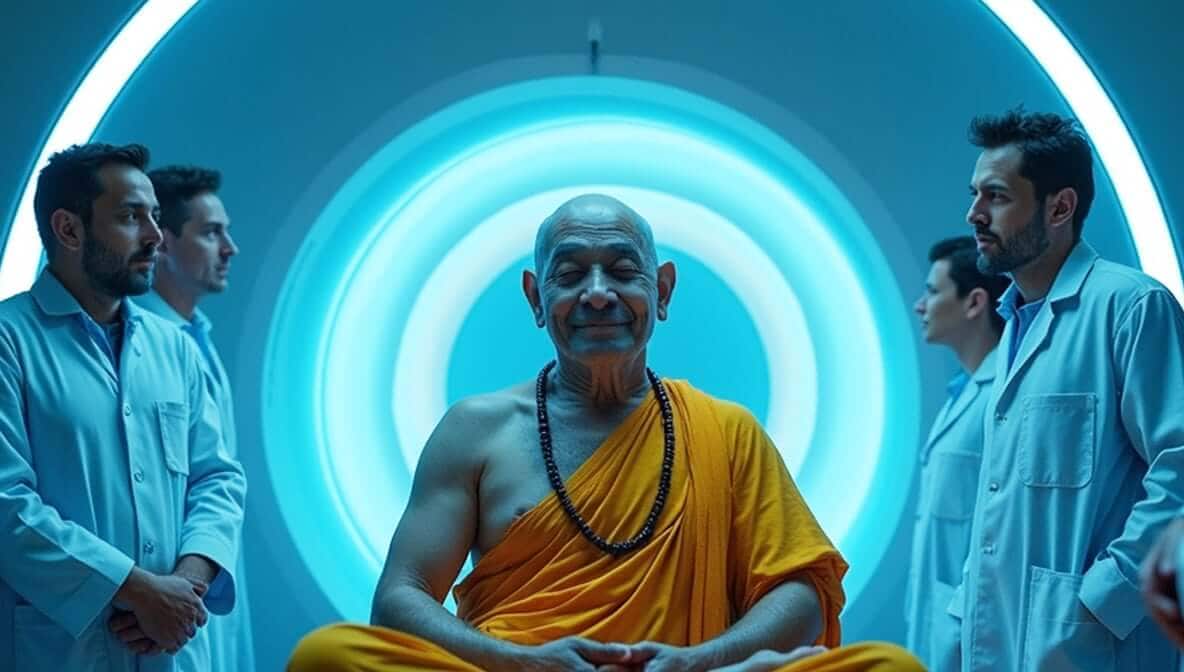
He hooks Ricard up to an fMRI machine. 256 electrodes are attached to his head. "Please meditate on unconditional love and compassion," Davidson asks.
What happens next leaves the researchers speechless.
Ricard's left prefrontal cortex, the region responsible for positive emotions, practically explodes with activity. His gamma waves shoot up to levels Davidson has never seen. They're so high that they fall outside the normal measurement scale.
The researchers have to recalibrate their equipment.
But it gets even crazier. They test Ricard's startle reflex, that involuntary reaction when something suddenly frightens you. In every human being it's uncontrollable. The nervous system reacts automatically before consciousness can step in.
With Ricard? Nothing. Absolute stillness. His nervous system stays as calm as a mountain lake.
The scientists can't believe it. This man hasn't just changed his brain. He has gained complete control over his nervous system.
The numbers no one thought possible
The data is clear:
- Gamma wave activity: 30 times higher than in control subjects
- Activity in the left prefrontal cortex: 800% above average
- Stress response: virtually nonexistent
- Neuroplasticity: brain changes that were considered impossible in a 70-year-old
Davidson publishes the study. The scientific community is divided. Can this be real? A person who has changed his brain so fundamentally that he lives in a permanent state of bliss?
The media pick up the story. Suddenly Matthieu Ricard is world-famous. They call him "the happiest man in the world".
What's his secret?
Journalists bombard him with questions. What does it feel like? What's the secret?
Ricard's answer is disarmingly simple: "It's like swimming in a warm bath of love and compassion. Permanently. Every moment."
But how did he get there?
The answer: 50,000 hours of focused meditation.
Every day, 4-6 hours, for decades. No distractions, no smartphone, no Netflix. Just him, his mind and the silence of the mountains.
Ricard trained his brain like a muscle, day after day, year after year, until his neural pathways had changed so much that bliss became his normal state.
The bitter truth for the rest of us
Here's the part that hurts: most of us will never meditate for 50,000 hours.
We have jobs, families and obligations. A life in the 21st century with all its demands and distractions.
Let's do the math: 50,000 hours means 6 hours of meditation a day for 23 years. No breaks. No vacations. No "I just don't feel like it today."
And even if we had the time, our modern brains are wired differently. Constant sensory overload, digital stress and always being reachable have changed our neural structure. Neurologically, we're no longer the same people we were 50 years ago.
Why I founded Brainwave3D
This is exactly where my story begins. Years ago, I came to the same realization: the states Ricard has reached are real. They're measurable. They're what we're all looking for: real, deep, lasting happiness.
But the traditional path? Unrealistic for 99.9% of people.
I couldn't accept that. Why should only a few monks in the mountains have access to these states? Why should true happiness be the privilege of people who can dedicate their entire lives to meditation?
I was obsessed with one idea: these states have to be accessible to everyone.
So I founded Brainwave3D. I read thousands of books, did research and experimented. My goal was clear: I wanted to find a way for ordinary people (people with jobs, stress and little time) to still gain access to these expanded states of consciousness.
Science had already proven that these states exist. The EEG data from Ricard and other monks showed exactly which frequency patterns are active in their brains. The question was: can we reproduce these patterns? Can we get the brain to activate these states without meditating for 50,000 hours?
The bridge to Matthieu Ricard's brain states
After years of research and development, the answer is: yes, we can.
Buddha Mind is the result of this obsession. A 40-minute frequency journey that reproduces the exact brainwave patterns of Matthieu Ricard and other long-term meditators.
We recreated their gamma wave bursts at 40 Hz, their theta-alpha coupling, and the precise frequency signatures that put their brains into these extraordinary states.
50,000 hours of meditation, compressed into 40 minutes.
Is it the same as meditating for 50,000 hours on a mountaintop? No. But it's the next best thing. It's the bridge between our hectic everyday lives and the states of consciousness that are really our birthright.
My vision
I firmly believe that far more people should live in Ricard's state. Imagine what the world would look like if millions of people had access to these states of bliss.
Less stress, less anxiety, less depression. More compassion, more clarity, more real connection.
This isn't a utopia. Science shows us that these states are real and achievable. Matthieu Ricard is living proof.
With Buddha Mind, you now have the chance to start this journey without giving up your life, without joining a monastery and without investing 50,000 hours.
What Ricard's story teaches us
Matthieu Ricard often says: "Happiness is a skill that can be trained." He's right. But he also had the luxury of dedicating his whole life to that training.
You probably don't have that luxury. But you do have Buddha Mind.
40 minutes that put your brain into states that took Ricard decades to reach. The same gamma waves, the same neural symphony, the same access to what he calls "unconditional bliss."
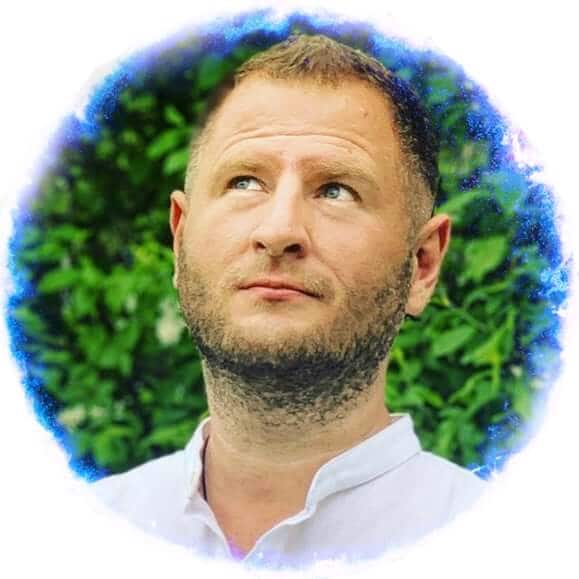
Yours, Marko C. Lorenz
Buddha Mind
€39,95
Downloade 40 Jahre Mönchs-Training direkt in dein Gehirn Stell dir vor… du schließt die Augen. Erst ist da nur das Rauschen deiner Gedanken, doch dann verändert sich etwas. Dein Kopf wird leichter, dein Atem tiefer, und plötzlich spürst du eine… Mehr erfahren

P.S.: When I first heard Matthieu Ricard's story, I knew: this is it. This is proof that true happiness isn't a fairy tale. It's a measurable, achievable reality. Buddha Mind is my contribution to making this reality accessible to you, because I believe every human being has a right to true happiness, not just a few monks in the mountains.
FAQs
Who is Matthieu Ricard?
Matthieu Ricard is a French Buddhist monk who previously worked as a molecular biologist at the Institut Pasteur in Paris. After completing his PhD under Nobel laureate François Jacob, he gave up his scientific career in 1972 and became a monk in the Himalayas. With more than 50,000 hours of meditation experience, he's now considered one of the most experienced Western meditation teachers.
Why is Matthieu Ricard called the "happiest man in the world"?
The title comes from scientific studies at the University of Wisconsin (2004) in which Ricard's brain was examined. The measurements showed exceptionally high activity in the left prefrontal cortex, the area associated with positive emotions, at 800% above average. His gamma wave activity was 30 times stronger than in control subjects, which led the researchers to recalibrate their measurement scales.
How was Matthieu Ricard's happiness measured scientifically?
Professor Richard Davidson and his team used fMRI scans and EEG measurements with 256 electrodes. They measured Ricard's brain activity during various meditative states, tested his startle reflex and analyzed his gamma waves. The results showed brain activity far outside the normal human range.
What are gamma waves and why do they matter?
Gamma waves (30-100 Hz) are the fastest brainwaves and are associated with higher cognitive functions, consciousness and feelings of happiness. Matthieu Ricard's measured gamma waves were 30 times stronger than those of the average person. This high gamma activity correlates with states of deep meditation, heightened attention and exceptional well-being.
How many hours has Matthieu Ricard really meditated?
Matthieu Ricard has spent more than 50,000 hours of his life in meditation. That's roughly 4-6 hours of daily meditation over a period of more than 40 years. This intensive practice has led to measurable, permanent changes in his brain structure.
What brain changes were found in Matthieu Ricard?
The studies showed:
- 30-fold increase in gamma wave activity
- 800% higher activity in the left prefrontal cortex
- Virtually nonexistent stress response
- Exceptional neuroplasticity for his age
- Complete control over normally involuntary reflexes
- Permanent changes in brain structure that persist outside of meditation
Can anyone become as happy as Matthieu Ricard?
In theory, yes. In practice, meditating for 50,000 hours is unrealistic for most people. It would mean 6 hours of meditation a day for 23 years. Modern technologies such as brainwave entrainment and special frequencies can, however, help you reach similar brain states faster.
What is Matthieu Ricard's secret to happiness?
Ricard describes his state as "swimming in a warm bath of love and compassion." His secret is decades of focused meditation, mainly on compassion and unconditional love. He trained his brain systematically until bliss became his normal state.
Where does Matthieu Ricard live today?
Matthieu Ricard lives mainly at Shechen Monastery in Nepal but travels regularly for talks and humanitarian projects. He is also the Dalai Lama's French interpreter and is involved in more than 200 humanitarian projects in Tibet, Nepal and India.
What books has Matthieu Ricard written?
Ricard has written several bestsellers, including "Happiness" (2007), "The Art of Meditation" (2008), "Altruism" (2013) and "Beyond the Self" (with Wolf Singer, 2008). His books have been translated into more than 20 languages.
What does science say about meditation and happiness?
Research confirms that regular meditation produces measurable changes in the brain. Studies show increased gray matter, improved emotional regulation and greater activity in areas linked to positive emotions. Long-term meditators like Ricard show permanent neurological changes.
How is Ricard's brain different from a normal brain?
Ricard's brain shows exceptional synchronization between different brain regions. While brain activity in most people is often chaotic, in his brain all areas work in perfect harmony. His gamma waves are permanently elevated, even when he isn't meditating.
What role did Richard Davidson play in the research?
Professor Richard Davidson of the University of Wisconsin-Madison led the groundbreaking studies on Matthieu Ricard. As a leading neuroscientist in the field of emotion research, Davidson was skeptical at first but was convinced by the results. His research revolutionized the scientific understanding of meditation.
Can you reach Ricard's brain states without 50,000 hours of meditation?
Modern approaches such as brainwave entrainment use the documented EEG patterns of long-term meditators. Technologies like Buddha Mind reproduce the specific frequencies (gamma, theta and alpha waves) measured in Ricard and can induce similar states in far less time.
What is the startle reflex test and why does it matter?
The startle reflex is an involuntary reaction to sudden, loud noises. In ordinary people it can't be controlled. Matthieu Ricard showed no measurable reaction, which points to extraordinary control over his nervous system, something the scientists had never seen before.
How did Ricard's story influence meditation research?
Ricard's case was a turning point in neuroscience. It proved that the adult brain is far more plastic than previously assumed and that meditation can bring about profound, measurable changes. This led to an explosion of research on meditation and neuroplasticity.
What does "neuroplasticity" mean in the context of Ricard's brain?
Neuroplasticity is the brain's ability to change and reorganize itself. Ricard showed changes that were considered impossible in a 70-year-old. His brain formed new neural pathways and strengthened existing ones so much that bliss became his permanent state.
Are there other people with brain patterns similar to Ricard's?
Yes, other long-term meditators show similar patterns. Studies of Tibetan monks with 10,000-60,000 hours of meditation experience showed comparable results. However, Ricard's case is especially well documented, and his readings are among the highest ever measured.
How can I start training my brain like Matthieu Ricard?
Start with daily meditation, even if it's only 10-20 minutes. Focus on compassion and loving-kindness, as Ricard does. Use supporting technologies such as brainwave entrainment (e.g. Buddha Mind) that reproduce the documented frequency patterns. Consistency and patience are what matter, because brain changes take time.
What is Buddha Mind and how does it help you reach Ricard's states?
Buddha Mind is a 40-minute neuroacoustic frequency based on EEG data from monks like Ricard. It reproduces the specific gamma, theta and alpha wave patterns measured in them. This lets you experience similar states of consciousness without having to meditate for decades.