

You work. You save wherever you can. You've read books, listened to podcasts, maybe even taken courses. And still, money feels like an opponent that's always one step ahead of you. This article shows you why that is, and which 11 money mindset habits can actually change it.
Why Your Money Problem Isn't a Money Problem
Imagine you're about to make a financial decision. Maybe an investment, a conversation about a raise, or simply the question of whether to treat yourself to something. And then it happens: a quiet but stubborn feeling creeps up. No rational weighing of options, no calculation. Just this vague No, I can't do that, that's not me.
Money beliefs aren't stored in the frontal lobe, where rational thinking happens. They sit in the limbic system, the evolutionarily ancient part of the brain that stores emotional patterns long before we even start thinking about them. That's exactly why classic affirmations fail so often: they're knocking on the wrong door. They're at the front entrance while the real money patterns sit down in the basement, running the thermostat.
Neuroscientists like Antonio Damasio of the University of Southern California have shown over decades of research that financial decisions are made primarily on an emotional basis and only justified rationally afterwards. The limbic system decides. The frontal lobe explains why after the fact.
So if you want to change your relationship with money, it isn't enough to think differently. You have to feel differently. And that happens through habits that go deep enough to actually reach the limbic system.
What Money Mindset Really Means (and What It Doesn't)
"Money mindset" is a term that has been used to death in recent years. Motivational speakers, Instagram coaches, manifestation gurus: they all talk about it. And almost all of them mean the same thing: think positive, visualize, affirm.
These approaches aren't wrong. They're too shallow.
A real wealth mindset isn't a mental construct you consciously put together. It's a neural pattern, a kind of operating system running in the background that determines which opportunities you notice, which risks you take and how you react to financial setbacks. Neuroplasticity, the brain's ability to change structurally, makes it possible to rewrite this operating system. But only if you go about it the right way.
Money mindset habits don't work through conscious repetition alone. They work because they recalibrate the limbic system through emotional experiences.
The brain doesn't learn by reading. It learns by experiencing. Each of the following habits is designed to work exactly at that level.
The 11 Money Mindset Habits That Actually Make a Difference
Each of these habits follows the same principle: it addresses the conscious level and also creates the conditions for something deeper to change. Some take two minutes a day. Some require you to take an honest look at yourself. All of them are worth it.
Habit 01: Make Your Money Beliefs Visible
What's really behind your money decisions?
Take ten minutes and write down what you heard about money as a child. "Money corrupts." "We're just not rich people." "You don't talk about money." These sentences aren't harmless. They burned themselves into the limbic system as neural patterns long before you were old enough to question them. Making them visible is the first step toward changing them. You can't dissolve what you can't see.
Habit 02: Redefine Your Financial Identity
Most people try to change their behavior without touching their identity. That's like wanting to harvest a tree's fruit without ever digging down to its roots.
James Clear has shown in his research on habits that real change starts with your self-image rather than your behavior. So the crucial question is "Who am I when it comes to money?" rather than "How do I save more?" Because someone who sees themselves as competent with money makes completely different decisions than someone who secretly considers themselves a total financial failure.
A simple first step: every day, write down one sentence that describes your new financial identity. No affirmation you talk yourself into. An observation you allow yourself.
Habit 03: Actively Interrupt Scarcity Thinking
Scarcity thinking is a survival mechanism. A brain trained to detect threats automatically scans its environment for lack. In their research at Harvard University, Sendhil Mullainathan and Eldar Shafir showed that people under financial stress experience a measurable decline in cognitive capacity, comparable to losing a full night's sleep. The brain is literally busy surviving and has no resources left for strategic thinking.
The habit: as soon as you notice a thought coming from scarcity ("I can't afford that", "It'll never be enough"), pause for a moment. Don't push the thought away, just name it: "That's a scarcity thought." This small interruption creates the distance the limbic system needs so it doesn't react on autopilot.
Dissolving money blocks doesn't start with more money. It starts in the moment you realize your brain is stuck in an old pattern, and you take a breath before you react. That's where everything begins.
Habit 04: See Money as a Neutral Tool
Money is a hammer. A hammer is neither good nor evil. It can build a house or smash a window. The moral charge that many people attach to money ("money makes you greedy", "rich people are dishonest") is one of the most persistent money blocks of all, because it quietly makes your subconscious push money away so you can stay a good person.
The exercise: write down three things you would do for others with more financial freedom. Not for yourself. For others. This changes the emotional valence of money in the limbic system. Threat turns into possibility.
Habit 05: Consciously Celebrate Small Wins
The brain's reward system runs on dopamine. And dopamine isn't only released with big successes. It's also released with small, consciously noticed progress. Neuroscientists like Wolfram Schultz of the University of Cambridge have shown that the dopamine system responds especially strongly to anticipated rewards, to the feeling of moving toward something good.
Don't wait for the big breakthrough. Celebrate that you reviewed one expense today. That you had a conversation about money you would otherwise have avoided. That you put aside €20 even though things were tight. This way, your brain links financial activity with positive feelings, and that changes the operating system.
Habit 06: Take the Emotion Out of Financial Decisions
You should never make big financial decisions in an emotional high, whether euphoric or panicked. That sounds obvious, but putting it into practice isn't. In an analysis of cognitive biases in investing, Swiss Life Wealth Managers showed that the brain systematically gives more weight to recent, emotional information than to long-term, rational data. Psychologists call this phenomenon recency bias.
The habit: set yourself a personal 24-hour waiting period for every financial decision above a certain amount. This has nothing to do with being hesitant. You're simply giving your frontal lobe a chance to speak up after the limbic system has had its say.
Habit 07: Shape Your Environment Consciously
The brain is a social organ. It learns through observation and mirroring. People who regularly spend time with others who have a healthy, relaxed relationship with money unconsciously adopt their thought and behavior patterns. That's mirror neurons at work.
This doesn't mean replacing all your friends. It means consciously choosing which conversations you give space to. Who in your circle talks about money? Out of fear or out of a drive to create? From scarcity or from possibility? Your environment is one of the most powerful and most frequently underestimated tools for changing money beliefs.
Conversations about money end in fear, envy or resignation. Financial decisions get avoided or pushed aside. Money is a taboo subject.
Conversations about money are curious, solution-oriented, and sometimes honestly difficult. Financial decisions are made actively. Money is a tool.
Habit 08: Link Images of the Future to an Emotional Anchor
Visualization alone changes nothing. What makes visualization effective is the emotional intensity attached to it. Neurologically, the brain barely distinguishes between a vividly imagined experience and one it actually lived through. Studies on mental imagery in sports psychology have shown this again and again since the 1980s.
The habit: don't imagine how much money you have. Imagine how you feel when financial anxiety no longer runs your everyday life. The difference is huge. The first is an abstract goal. The second is an emotional anchor, and emotional anchors are the language the limbic system understands.
Habit 09: Read Money Anxiety as a Signal
Fear isn't an enemy. Fear is information. When you react physically to a bank statement, a tax notice or a conversation about investing (racing heart, shallow breathing, the urge to just close the tab), your nervous system is sending a signal: here's something that feels threatening.
The habit: learn to read these signals without being controlled by them. Breathe before you react. Ask yourself: is this a real threat, or an old pattern being projected onto a new situation? In most cases, it's the latter. And simply recognizing that already gives you back room to act.
Habit 10: Overwrite Subconscious Patterns Through Repetition
Neuroplasticity works on a simple principle: neurons that fire together wire together. Whatever you repeat regularly becomes a neural highway. Whatever you stop repeating slowly withers away.
Old money patterns don't disappear overnight. But they lose their dominance when new patterns are repeated consistently enough. The research of Michael Merzenich, one of Stanford University's leading neuroplasticity researchers, shows that the brain stays structurally capable of learning at any age, provided the repetition is tied to emotional meaning.
Money beliefs don't change through a single insight. They change through consistent, emotionally charged repetition of new patterns, over weeks and months rather than overnight.
Habit 11: Use Neuroplasticity Deliberately, in the State Where Change Happens
This is the habit people talk about least, and it may be the one with the most leverage.
The brain isn't equally receptive to new patterns at all times. In the waking state, when the frontal lobe is active and your critical mind is running at full speed, the brain filters new information through existing beliefs. Just before falling asleep, in deep relaxation or in meditative states, when the brain drifts into the theta range (5.5 to 7 Hz), this filter function is significantly reduced. The subconscious becomes receptive.
In 2017, Jirakittayakorn and Wongsawat showed in Frontiers in Neuroscience that 6 Hz binaural beats measurably increase cortical theta activity, and within ten minutes. In this state, the brain learns differently. More deeply. More lastingly.
The habit: spend at least 15 to 20 minutes every day in a relaxed, near-theta state to anchor new money patterns. Whether through meditation, guided relaxation or targeted audio support, the state is the key, more than the technique.
Why Money Mindset Habits Alone Often Aren't Enough
All eleven habits work. They're based on sound neuropsychological principles and on what we know about limbic learning, neuroplasticity and emotional conditioning.
But there's a gap, and it sits in what happens between the habits: the noise of everyday life, the old automatic reactions, the moment when you already know what you should do and still don't do it.
Classic affirmations fail because they don't reach the limbic system. Willpower runs out. Motivation comes and goes. What remains are deeply anchored patterns, and they only change when you address them at the root: in the subconscious, in the state of heightened suggestibility in which the brain is actually open to new programming.
🔬 Methods Compared
How deeply do different approaches reach the limbic system?
📊 Approach vs. Depth of Effect
Positive affirmations | Conscious thinking, superficial |
Visualization | Medium, if emotionally charged |
Behavioral habits | Medium, through repetition |
NLP neuro-suggestions in the theta state | Deep, reaches the limbic system directly |
WHY THE DIFFERENCE?
In the theta state, the critical filter function of the frontal lobe is reduced. New language patterns reach the limbic system directly, right where money beliefs are actually stored.
⚡ Bottom Line
Habits create the conditions. Theta-supported neuro-suggestions use those conditions to change money patterns at their root.
The Next Step: If You Want to Go Deeper
These eleven habits are a real start. If you apply them consistently, you'll notice your relationship with money slowly changing.
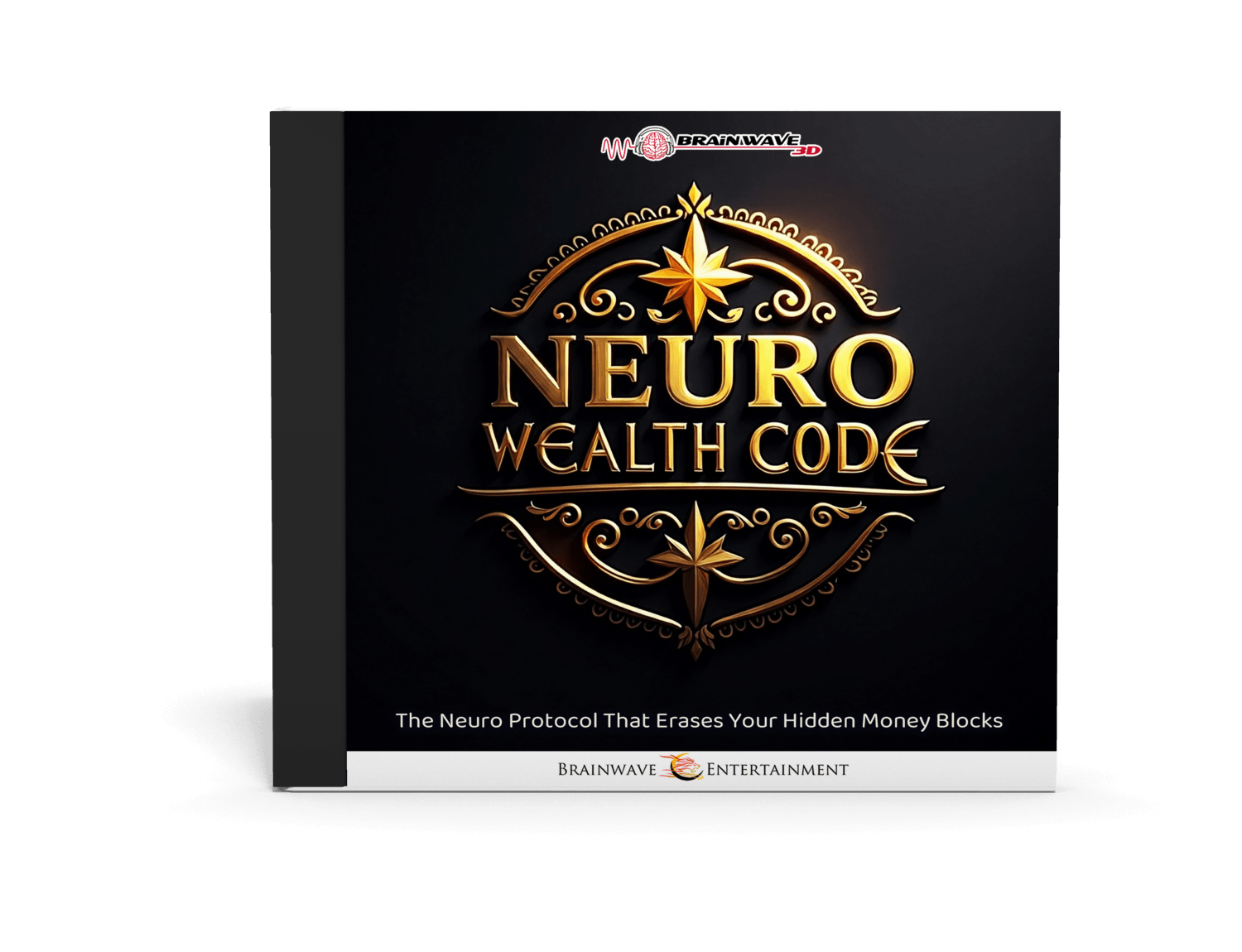
For everyone who wants to go deeper and address the limbic money patterns directly instead of just changing the surface, I developed the Neuro Wealth Code. It uses targeted neuro-suggestions combined with theta brainwave entrainment to dissolve unconscious money blocks where they really sit: in the subconscious, in the state in which the brain is actually receptive.
The method is based on proven NLP principles and the findings of neuroplasticity research. It combines emotional anchors with the classic suggestion pattern "every day, in every way, more and more", a technique that gently bypasses your critical mind and works right where money beliefs are really stored. No willpower training. No affirmations you have to talk yourself into every day. Instead, you use your brain's natural learning architecture to replace scarcity thinking, layer by layer, with real financial agency.
If you know the feeling that money is always tighter than it should be, even though you work hard and make an effort, this could be something for you. The same goes if you're ready to change your neural operating system along with your behavior. And if you've stopped believing that more motivation or more discipline is the answer.
If you're just starting to work on your money mindset, begin with the habits in this article. They'll take you a long way. And if at some point you notice you need more, you'll know where to find the next step.
Yours, Marko C. LorenzReady to go deeper than affirmations ever could?
The Neuro Wealth Code works with theta brainwave entrainment and NLP-based neuro-suggestions to recalibrate limbic money patterns directly. 10 minutes. Scientifically grounded. No willpower needed. See how it works and whether it's right for you.
FAQs
What are money mindset habits and why do they matter?
Money mindset habits are regular mental and behavioral practices that change your unconscious relationship with money. They matter because money beliefs don't live in rational thinking. They're anchored deep in the limbic system. If you only change your behavior without tackling the emotional roots, you usually won't get very far.
How can I dissolve my money blocks?
Dissolving money blocks starts with making your own money beliefs visible. Many of them date back to childhood and run unconsciously. Targeted habits such as interrupting scarcity thinking, redefining your financial identity and using neuroplasticity let you overwrite these patterns layer by layer.
What does a wealth mindset mean in concrete terms?
A wealth mindset isn't positive thinking on demand. It's a neural pattern that works in the background and determines which financial opportunities you notice, which risks you take and how you react to setbacks. It develops through consistent, emotionally charged repetition of new thought and behavior patterns.
Why do classic affirmations often fail with money problems?
Affirmations address the frontal lobe, meaning conscious thinking. Money beliefs, however, sit in the limbic system, the brain's emotional memory. As long as new beliefs aren't emotionally anchored and don't reach the right brain state, the effect stays superficial.
What does neuroplasticity have to do with money?
Neuroplasticity describes the brain's ability to change structurally. For financial agency, this means old money patterns really can be overwritten through consistent repetition of new, emotionally meaningful experiences. The brain remains capable of this kind of learning at any age.
What role does the theta state play in changing money beliefs?
In the theta state (5.5 to 7 Hz), meaning deep relaxation or the moments just before falling asleep, the brain's critical filter function is significantly reduced. In this state, new patterns reach the subconscious directly. That makes it the most effective window for lasting change in money beliefs.
How long does it take to change your money mindset?
Giving a blanket time frame wouldn't be honest. What research shows: structural changes in the brain come from consistent, emotionally charged repetition over weeks and months. Single insights change nothing. Regular practice does.